Authorized Training Partner (ATP) by Project Management Institute (PMI), USA
Project Management Professional (PMP)® Certification Training
The Project Management Professional (PMP)® Certification is the world’s most recognized credential for project managers, offered by the Project Management Institute (PMI), USA. Our comprehensive training program is designed to equip professionals with the knowledge, skills, and confidence required to lead projects successfully across industries.
This course covers the latest PMP Exam Content Outline (ECO), focusing on the three key domains — People, Process, and Business Environment. With a balance of theory, real-world case studies, and hands-on exercises, participants will gain practical insights into project management best practices aligned with the PMBOK® Guide and Agile methodologies.
Exam Content Outline
The following table identifies the proportion of questions from each domain that will appear on the exam.
| Domain | Percentage of items on the Exam |
|---|---|
| i. People | 33% |
| ii. Process | 41% |
| iii. Business Environment | 26% |
| Total | 100% |
Schedules for Project Management Professional (PMP)® Certification Training
01.
9th May to 31st May 2026
Sat & Sun
7:30AM to 12PM (IST)
4.5 Hours
8 Sessions
02.
6th June to 28th June 2026
Sat & Sun
7:30AM to 12PM (IST)
4.5 Hours
8 Sessions
03.
4th July to 26th July 2026
Sat & Sun
7:30AM to 12PM (IST)
4.5 Hours
8 Sessions
04.
1st August to 30th August 2026
Sat & Sun
7:30AM to 12PM (IST)
4.5 Hours
8 Sessions
PMP® course Contents
| Chapter No | Main Topic | Sub Topic |
|---|---|---|
| 01. | Introduction |
1.1 About your instructor
1.2 About this course
1.3 About the PMP certification
1.4 About the exam
|
| 02. | The Big Picture |
2.1 PMP exam domains
2.2 What is a project?
2.3 Life cycles and development approaches
2.4 An introduction to governance
|
| 03. | Stakeholders, Vision, and Communication |
3.1 Engage stakeholders
3.2 Develop a common vision
3.3 Plan and manage communication
3.4 Align and manage stakeholder expectations
|
| 04. | Team, Conflict, and Knowledge |
4.1 Lead and structure the team
4.2 Manage conflict
4.3 Ensure knowledge transfer
|
| 05. | Core Planning: Scope, Value, Resources, Finance, Risk |
5.1 Developing Scope and Value Orientation
5.2 Risk and Compliance Foundations
5.3 Plan and Manage Finance
5.4 Plan and Manage Resources
|
| 06. | Integrated Planning: Method, Plan, Schedule, Quality, and Procurement |
6.1 Developing an Integrated Project Management Plan and Plan Delivery
6.2 Planning and Managing the Schedule
6.3 Planning and Optimizing the Quality of Products and Deliverables
6.4 Planning and Managing Procurement
|
| 07. | Execution, Monitoring, Change, and Impediments |
7.1 Evaluate Project Status and Manage Artifacts
7.2 Manage and Control Changes
7.3 Remove Impediments and Manage Issues
|
| 08. | Business Environment Dynamics, Continuous Improvement, and Closure |
8.1 Evaluate External
8.2 Business Environment Changes
8.3 Support Organizational Change
8.4 Continuous Improvement
8.5 Manage Closures
|
| 09. | PMP® Exam Preparation |
9.1 Principles for the better retention
9.2 Use the Right Mix of Study Resources
9.3 Think Like a Project Manager
9.4 Building Critical Thinking Skills
9.5 Simulate the Real Exam Experience
9.6 Expect Your Motivation to Fluctuate
9.7 Decide Where to Take Your Exam
|
Why Choose This Course?

100% PMI-approved training content

Covers both Predictive (Waterfall) and Agile/Hybrid approaches

Delivered by PMI-certified instructors with industry experience

Interactive learning through case studies, mock tests, and group discussions

Guidance for PMP Exam Application and 35 Contact Hours Certificate
Who Should Attend?
This course is ideal for:
- Project Managers, Team Leaders, and Coordinators
- Engineers, Consultants, and IT Professionals managing projects
- Professionals aspiring to move into leadership or project management roles
- Anyone seeking to earn the globally recognized PMP certification
PMP® Program Outcomes
By the end of the PMP® course, learners will be able to:
- Apply critical thinking in scenario-based project situations
- Integrate people, process, and business strategy for project success
- Deliver projects that create measurable business value
- Adapt to AI, sustainability, and evolving industry trends in project management
- Confidently attempt and clear the PMP® Examination
Course Details
Duration: 35+ Hours of Instructor-Led Training
Mode: Classroom / Online Live
Certification: 35 Contact Hours (PMI requirement)
Support: Exam prep materials, question banks, and post-training mentoring

Take the Next Step
Advance your career with the PMP Certification Training and join a global community of project management professionals. Enroll today to become a certified project leader and drive project success with confidence.
PMP® Certification Eligibility Requirements
To be eligible for the PMP certification, you must meet one of the educational and professional experience paths listed below. All project management experience must have been accrued within the last 10 years in a professional setting prior to your application submission.
Educational Background
Professional Project Management Experience
Completion of upper-secondary/secondary school (e.g., High School Diploma, GED-type secondary equivalency, Upper-Secondary/School Leaving Certificate) mapped to EQF Level 4 / ISCED 3–4 (or the national framework level for upper-secondary completion).
Minimum 60 months/5 years of non-overlapping experience leading projects in the past 10 years
OR
Completion of a recognized associate’s-level, higher-certificate, or advanced technical/vocational program mapped to EQF Level 5 / ISCED 5 (or national framework level designated as post-secondary, short-cycle tertiary).
Minimum 48 months/4 years of non-overlapping experience leading projects in the past 10 years
OR
Bachelor’s degree (or higher) from a recognized/authorized institution; or an advanced professional/vocational qualification that is formally mapped to EQF Level 6 / ISCED 6 (or the national framework level designated as bachelor-equivalent).*
Minimum 36 months/3 years of nonoverlapping experience leading projects in the past 10 years
OR
Bachelor’s or postgraduate degree awarded by a program accredited by PMI’s Global Accreditation Center (GAC). (GAC accreditation is a program quality designation and does not, by itself, change the degree level required for eligibility.)
Minimum 24 months/2 years of non-overlapping experience leading projects in the past 10 years
Join Constro Skills today and take the next step toward becoming a certified Project Management Professional!
Your PMP success story starts here.
Exam date - 25th Jul 2026

Kadambari Dhanwant
CAPM® Preparation
Aarvee Engineering Consultants Limited
Designation
Assistant Manager - PMO
Exam date - 2nd Jul 2026

Ashish Raut
PMP® Preparation
Mace
Designation
Planning & Control
Exam date - 11th Jun 2026

Abhinandan Koli
PMP® Preparation
S J Contracts Pvt. Ltd.
Designation
Sr. Planning Engineer
Exam date - 14th Jun 2026

Suraj Dhond
PMP® Preparation
Atkinrealis
Designation
Project planning and control, engineer - II
Exam date - 8th Jun 2026

Anirudha Gholap
PMP® Preparation
Eka Mobility
Designation
Senior Manager
Exam date - 8th Jun 2026

Mrunal Dahiwale
PMP® Preparation
Unispace Global
Designation
Group Information Management Specialist
Exam date - 5th Jun 2026

Riddhi Gediya
PMP® Preparation
Formerly worked with TATA Project Ltd.
Designation
Assistant Manager - Planning
Exam date - 3rd Jun 2026

Mihir Ayyanchira
PMP® Preparation
L&T
Designation
Sr. Manager Planning
Exam date - 2nd Jun 2026

Abhijeet Hingmire
PMP® Preparation
S J Contracts Pvt Ltd
Designation
Asst Manager Planning
Exam date - 28th May 2026

Amit Debnath
PMP® Preparation
Godrej Properties Ltd.
Designation
Senior Executive
Exam date - 23rd May 2026

Harshada Kapure
PMP® Preparation
Yelloskye
Designation
Client Operation Specialist-Civil
Exam date - 20th May 2026

Ar. Nalini Naik Nimbalkar
PMP® Preparation
SMEF's Brick School of Architecture, Pune
Designation
Head - Masters Program
Exam date - 19th May 2026

Omkar Jadhav
PMP® Preparation
Stantec Resourcenet India Pvt. Ltd.
Designation
Project Controller
Exam date - 13th May 2026

Sumit Tilke
PMP® Preparation
Stantec Resourcenet India Pvt. Ltd.
Designation
Project Controller
Exam date - 7th April 2026

Anand Kulkarni
PMP® Preparation
Primus Techsystems
Designation
Project Manager
Exam date - 27th April 2026

Pradip Suresh Omble
PMP® Preparation
Ashoka Buildcon Limited
Designation
Assistant General Manager
Exam date - 22nd April 2026

Swapnil Kokil
PMP® Preparation
Mace India
Designation
Sr. Planning Manager
Exam date - 27th Mar 2026
Mangesh Divekar
PMP® Preparation
AL Qarar, Oman
Designation
Formerly worked with AL Qarar, Oman GM Planning
Exam date - 6th Mar 2026

Sanket Kawathekar
PMP® Preparation
Avante Spaces Limited (A Kirloskar group company)
Designation
Sr. Manager Planning and Monitoring
Exam date - 6th Mar 2026

Manoj Mhetre
PMP® Preparation
Avante Spaces Limited (A Kirloskar group company)
Designation
Senior Manager - Construction
Exam date - 10th Feb 2026

Rajreddy Patil
PMP® Preparation
Mantra Properties
Designation
Associate Manager
Exam date - 07th Feb 2026

Bhushan Bhosale
PMP® Preparation
VTP Realty
Designation
Sr. Manager - Project Management
Exam date - 04th Feb 2026

Parag Patel
PMP® Preparation
Stantec
Designation
Project Controller
Exam date - 07th Feb 2026

Mobin Sayyad
PMP® Preparation
SCON Projects Pvt. Ltd.
Designation
Planning engineer and coordinator
Exam date - 02nd Feb 2026

Dipti Jagtap
PMP® Preparation
Exam date - 17th Jan 2026
Chandrakant Sakhare
PMP® Preparation
L&T Heavy Engineering
Designation
Assistant General Manager Project Management
Exam date - 05th Jan 2026

Pankaj Undage
PMP® Preparation and Primavera P6
DMAC Shared Services India LLP
Designation
Senior Planning Engineer
Exam date - 18th Oct 2025

Shankar Mane
PMI' Project Management Professional PMP®
HNI GBSC India Pvt Ltd Pune
Designation
Sr. Product Development Engineer
Exam date - 5th Sep 2025

Shaik Anwar Basha
PMP® Preparation
Alfanar Projects
Designation
Sr. Planning and Cost Control Engineer
Exam date - 18th Aug 2025

Koshini Sutar
CAPM® Preparation
Stantec ResourceNet (India) Pvt. Ltd.
Designation
Graduate Project Controller
Exam date - 21st July 2025

Vijai Amirtharaj
PMP® Preparation
TATA Projects Ltd
Designation
Senior Manager - Planning
Exam date - June 2025

Munna Chaudhary
PMP® Preparation
Pacific Engineering Projects Ltd.
Designation
Planning & Project Engineer
Exam date - June 2025

Ulka Shete
CAPM® Preparation
Exam date - June 2025
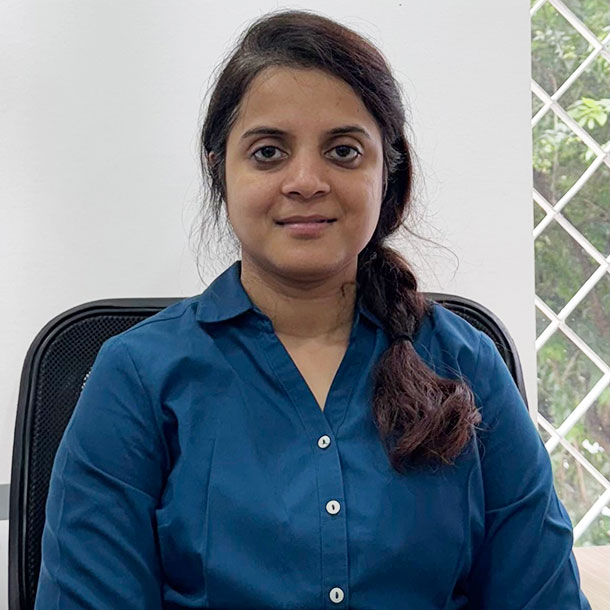
Reema Asar
PMP® Preparation
Suroj Buildcon Private Limited
Designation
Deputy Manager, Tenders and Contracts
Exam date - June 2025

Nikhil Vinod Bakane
PMP® Preparation
Suroj Buildcon Private Limited
Designation
Dy Manager - Tendering and Contracts
Exam date - June 2025

Ajinkya Mahajan
PMP® Preparation
Patel Engineering Ltd
Designation
Assistant manager-PMC (Project monitoring & control)
Exam date - June 2025

Sunil Targe
PMI's PMP®
Suroj Buildcon Private Limited
Designation
Project Manager
Exam date - May 2025
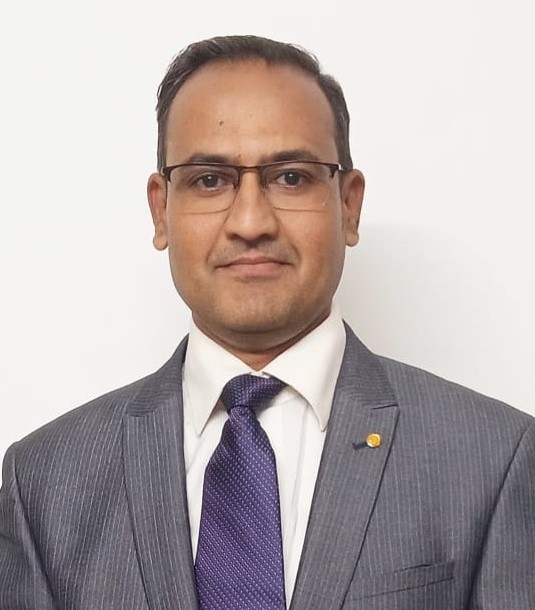
Venugopal Edake
PMI's PMP®
Suroj Buildcon Private Limited
Designation
Manager - Accounts
Exam date - May 2025

Manish Kumar
PMI's PMP®
Suroj Buildcon Private Limited
Designation
Assistant Project Manager
Exam date - Dec 2023

Ankit Sharma
PMI's PMP®
TATA Projects
Designation
Deputy Manager - Planning
Exam date - Aug 2024

Dr Rohan Nalawade
PMI's PMP®
KIT's College of Engineering (Autonomous Institute Kolhapur)
Designation
Associate Professor and Dean International Relations
Exam date - May 2025

Jagdish Patil
PMI's PMP®
Suroj Buildcon Pvt. Ltd.
Designation
Dy. Manager Strategy & Coordination
Exam date - July 2023

Nilesh Pawar
PMI's PMP®
S J Contracts Pvt Ltd
Designation
Planning Head
Exam date - Dec 2019

Jyoti Nirmal
PMI's PMP®
BNY
Designation
Vice President - Agile Project
Exam date - May 2017

Onkar Jadhav
PMI's PMP®
Naiknavare Developers Pvt. Ltd.
Designation
Assistant project manager
Exam date - Oct 2024
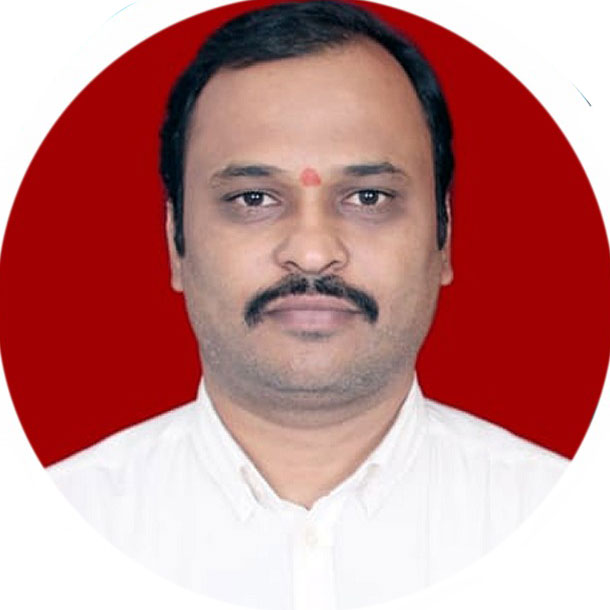
Prafulla Dhavale
PMI's PMP®
S J Contracts Pvt. Ltd.
Designation
Manager, Billing
Exam date - May 2025

Pritam Gahlaut
PMI's PMP®
TATA projects Ltd.
Designation
Resident construction manager
Exam date - May 2025

Priyanka Naik
PMI's PMP®
Vertiv
Designation
Project manager
Exam date - Mar 2025

Rita Singh
PMI's PMP®
TATA Projects Ltd.
Designation
DGM Projects
Exam date - May 2025

Saif Pathan
PMI's PMP®
Suroj Buildcon Pvt. Ltd.
Designation
Asst Manager Project Coordinator
Exam date - Jan 2024

Shailendra Kumar Soni
PMI's PMP®
Rohan Builder (Ind) Pvt. Ltd.
Designation
Senior General Manager
Exam date - Aug 2023

Shailendra Mohite
PMI's PMP®
S J Contracts Pvt. Ltd.
Designation
General Manager
Exam date - May 2025

Sudhir Birajdar
PMI's PMP®
Suroj Buildcon Pvt. Ltd.
Designation
AGM - Technical
Exam date - Dec 2023

Suhas Dhuri
PMI's PMP®
Adani Realty, Pune
Designation
Deputy Manager